
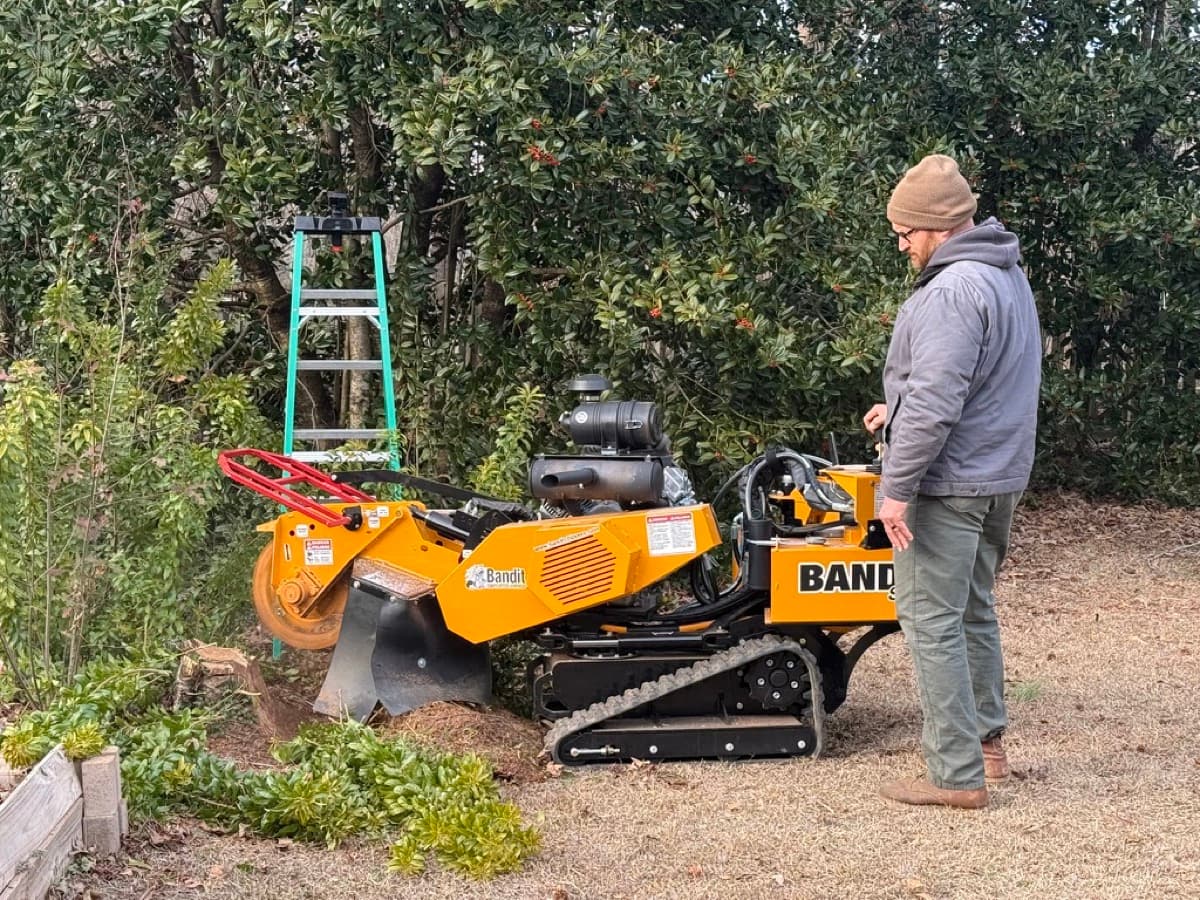
The stump is gone. Now what? After stump grinding, you're left with a pile of wood chips and a depression where the stump used to be. Here's how to fill the hole, restore your lawn, and make that spot look like there was never a tree there.
WHAT YOU'RE WORKING WITH
After grinding, you'll typically have:
- A hole: Usually 6-8 inches deep where the stump was
- Wood chips: About 4-6 times the volume of the original stump
- Disturbed soil: The area around the hole will be loosened
- Underground roots: Still there, but will decompose over time
OPTION 1: THE SIMPLE APPROACH
For most homeowners who just want the area to blend back into their lawn, here's the straightforward method:
- Rake chips into the hole: Use the wood chips to partially fill the depression. Don't fill it completely to the top. Leave room for settling.
- Add topsoil: Cover the chips with 2-4 inches of quality topsoil. The chips will decompose and settle over time, so piling slightly high is fine.
- Compact lightly: Tamp down the soil gently to reduce settling. Don't pack it too hard or water won't penetrate.
- Seed or sod: Plant grass seed or lay sod over the topsoil.
- Water regularly: Keep the new grass watered until established.
OPTION 2: FOR IMPATIENT GARDENERS
Want to plant something right away? Here's a more thorough approach:
- Remove most chips: Shovel out the wood chips and use them as mulch elsewhere in your yard. Fresh chips can temporarily rob nitrogen from soil as they decompose.
- Fill with topsoil: Use good quality topsoil mixed with compost to fill the hole completely.
- Add nitrogen: Apply a nitrogen-rich fertilizer to counteract any nitrogen depletion from remaining wood.
- Plant immediately: This method is better if you want to plant flowers, shrubs, or vegetables in the spot.
THE SETTLING ISSUE
Here's something important to know: the area will settle over time. As the wood chips and remaining roots decompose, the ground will sink. This is normal and can continue for 1-3 years.
Plan for it: Mound the soil slightly above the surrounding lawn level initially. As it settles, it will level out. If it settles too much, just add more topsoil and reseed.
WHAT ABOUT THE REMAINING ROOTS?
With stump grinding, roots are left in the ground. They will naturally decompose over 5-10 years. During this time, you might notice:
- Mushrooms: Totally normal. They're breaking down the wood
- Soft spots: As roots decay, the ground above them may soften
- Slight settling: Root channels will slowly collapse
None of this is harmful to your lawn. It's just nature doing its job.
BEST TIME TO SEED AFTER GRINDING
In Upstate South Carolina, timing matters for grass seed:
- Fall (September-October): Best time for fescue and cool-season grasses
- Spring (March-April): Second best for fescue; good for Bermuda and warm-season grasses
- Summer: Okay for Bermuda; difficult for fescue
- Winter: Wait until spring for warm-season; can prep area now
WHAT NOT TO DO
A few common mistakes to avoid:
- Don't leave the hole open: It's a tripping hazard and collects water
- Don't fill with just chips: Pure wood chips can create a nitrogen deficit that stunts grass growth
- Don't plant a new tree in the same spot right away: The old root system can harbor diseases and compete with new roots
- Don't expect perfection immediately: It takes a season or two for the area to fully blend in
USING THE WOOD CHIPS
Got extra chips? Here are some good uses:
- Mulch for trees and shrubs: Great around established plants (but let them age a few months first)
- Garden paths: Natural, low-cost pathway material
- Compost addition: Mix with green materials for compost
- Erosion control: Spread on slopes to reduce runoff
We can also haul away the chips for an additional fee if you don't want them.
Need Stump Grinding?
Nelson Land Management provides professional stump grinding throughout Greenville, Anderson, and Upstate SC. We include basic cleanup and can advise on restoration options for your specific situation.
BOTTOM LINE
Restoring the area after stump grinding is straightforward: fill with a mix of chips and topsoil, seed with grass, and be patient as things settle. Within a season or two, you won't even remember there was ever a stump there. If you have questions about your specific situation, give us a call. We're happy to help.