
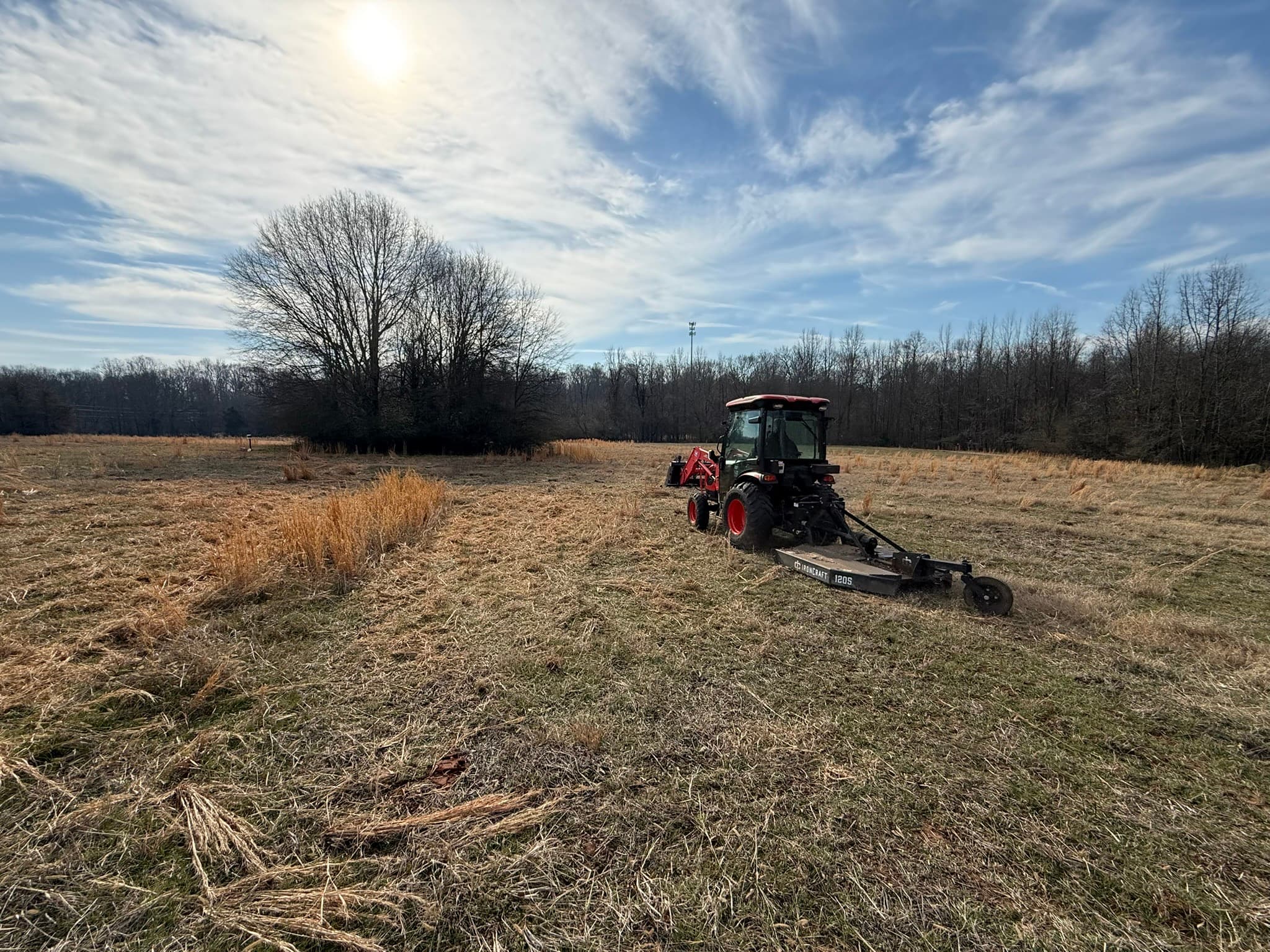
Horses, cattle, goats, or just the view: sooner or later most Upstate landowners look at a wooded back section and picture grass. The conversion is absolutely doable (much of the pasture in Anderson and Spartanburg counties was woods twice already) but the order of operations decides whether you get a pasture or an expensive weed field. Here's the sequence, the costs, and the calendar.
STEP 1: CLEAR IT, ALMOST ALWAYS BY MULCHING
For pasture conversion, forestry mulching beats bulldozing on almost every count. It runs roughly half the cost, it doesn't scrape your topsoil into a burn pile (that topsoil is your future grass), and the chip layer it leaves behind suppresses regrowth while it feeds the ground. Bulldozing to bare dirt earns its keep only on heavy timber or where the land itself needs reshaping. Standing timber with real size gets dropped and processed first. Taking trees down is part of the job, not a separate contractor.
STEP 2: DEAL WITH THE STUMPS
A pasture you intend to mow or bush hog cannot have stumps standing proud of the dirt. Every one is a blade strike waiting to happen. Mulching grinds them near grade; the ones in your future mowing lanes get taken below grade so equipment passes clean. You do not need every root dug out of a grazing field; you need a surface machines and animals can cross safely.
STEP 3: LIME, THEN SEED ON THE SC CALENDAR
Ground that grew pines for 30 years is acidic. Pull a soil sample (your county extension office tests them cheap), spread lime to correction, and seed in the right window: September-October for fescue, the backbone cool-season grass of Upstate pasture, or late spring for bermuda. The rhythm that works: mulch in summer, lime when the sample comes back, drill or broadcast fescue in early fall, rest it until spring.
WHAT THE WHOLE CONVERSION COSTS
- Clearing & mulching (per acre)$1,500 - $2,500
- Stumps to grade in mowing lanes (per acre)$200 - $500
- Lime, fertilizer & seed (per acre)$300 - $600
- All-in pasture conversion (per acre)$2,000 - $4,000
Multi-acre projects land at the bottom of those ranges. The per-acre math from our 5-acre clearing cost guide applies here too.
STEP 4: DEFEND IT (THE PART EVERYONE SKIPS)
The woods want the land back. Sweetgum sprouts, pine seedlings, and blackberry will test a reclaimed field hard for the first three years, and the defense is boring and cheap: brush hog it twice a year, late spring and late summer. Two cuttings a year costs a fraction of re-clearing, which is exactly what skipping two seasons buys you. Numbers in our brush hogging cost guide.
PICTURING GRASS WHERE THE WOODS ARE?
We handle the whole conversion: clearing, mulching, stumps, and the maintenance cutting that keeps it pasture. Free walkthroughs across the Upstate.